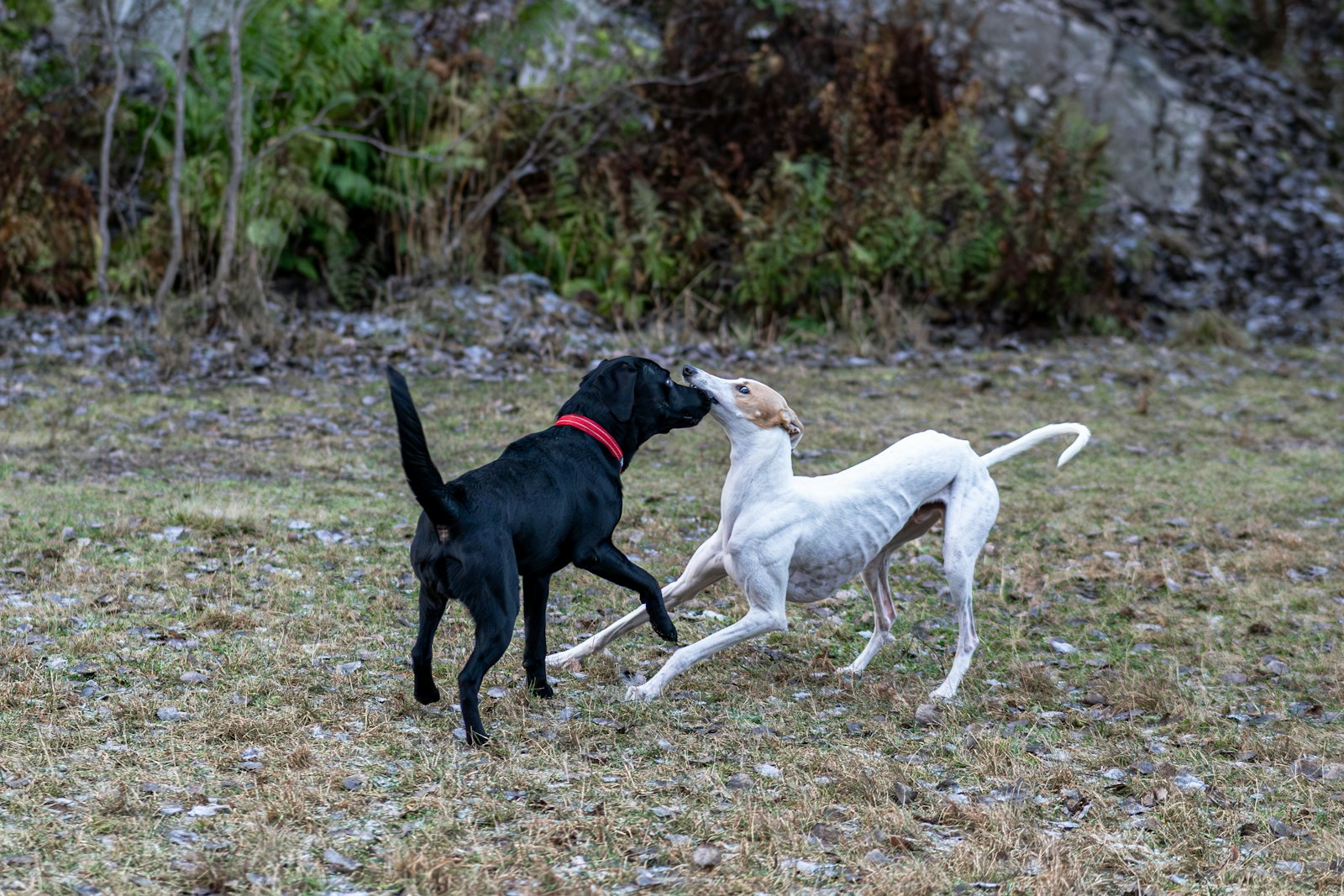
When play biting at dog daycare is normal, and when staff should step in
If you have ever watched a group of dogs play, you know it does not always look gentle. Dogs chase, wrestle, body-check, grab at collars or necks, paw at each other, and use their mouths in ways that can look intense to people.
At dog daycare, that raises a fair question: when is this normal play, and when should staff interrupt it?
The short answer is that play biting and roughhousing are often normal. What matters is whether the interaction stays mutual, loose, and fair. In a daycare setting, staff should not stop every noisy exchange, but they also should not stand back and hope dogs sort everything out on their own.
For dog owners looking at daycare options in Dublin, this is one of the clearest signs of good supervision. A well-run daycare knows the difference between healthy play and play that is starting to slide into stress, pressure, or risk.
Play biting is often part of healthy dog play
Mouthing is one of the most common ways dogs play with each other. Puppies do it, adolescents do it, and plenty of adult dogs do it too, especially when they are excited and socially comfortable.
Healthy play biting is usually controlled. Dogs are using their mouths, but not with the force you would expect in a real fight. It is also part of a back-and-forth interaction. One dog mouths, the other bounces away and comes back, they switch roles, pause, circle, and re-engage.
Body language matters here. Dogs in good play often look loose and wiggly. You may see play bows, curved movement, exaggerated bouncing, or brief pauses that keep the interaction social instead of tense. A bigger or more confident dog may even hold back a little, lowering its body or slowing down to keep the game fair.
That is why noise alone is not a reliable way to judge a playgroup. Some dogs growl, bark, and spar with open mouths while staying perfectly appropriate. Loud does not always mean unsafe. Quiet does not always mean relaxed either.
Rough play is not automatically bad play
Some dogs genuinely enjoy rough, athletic play. They like chase games, wrestling, shoulder bumps, and fast movement. A daycare should not expect every dog to play softly all the time.
The goal is not to remove energy from the room. The goal is to keep that energy inside safe limits.
Good rough play has give-and-take. Dogs take turns chasing and being chased. They switch positions in wrestling. One dog is not repeatedly pinning, slamming, or steamrolling the other without a break.
Healthy play also includes recovery. A dog should be able to pause, shake off, sniff, step away, or take a breath without being immediately harassed back into the interaction. When staff call a dog away for a reset, that dog should be able to come down instead of exploding with frustration.
This is especially important in daycare, where even normal play can tip into trouble if arousal gets too high. Too many dogs, too much motion, too little rest, or weak supervision can turn a playful interaction into something pushy and messy very quickly.
How to tell when play is no longer fair
The biggest red flag is not just intensity. It is unfairness.
One dog may be trying to create space while the other keeps driving in. One may repeatedly hide behind staff, hug the walls, duck under furniture, roll over, or run without choosing to come back. A dog who keeps getting mounted, pinned, neck-grabbed, or body-checked by the same play partner may not be having fun, even if the room still looks playful from a distance.
There are also quieter signs that a skilled daycare should notice early. A dog may freeze for a beat before moving again. It may start turning its head away, licking its lips, lowering its body, tightening its mouth, or scanning for an exit. Some dogs get louder and faster when they are stressed, which can fool people into thinking they are still enjoying themselves. Others go stiff right before they snap.
Staff should be watching for those changes, not just waiting for an obvious fight. Stiffness, hard staring, repeated targeting, piling on around a nervous dog, or frustration that keeps rising after interruptions are all reasons to step in.
Why good daycare staff interrupt early
One of the most common mistakes in group care is waiting too long because the dogs have not technically fought yet. That is not a good enough standard.
At daycare, the job is prevention. Staff should interrupt rough play before it turns into a real problem, not after.
Short breaks tell you a lot. If two dogs can separate, shake off, and come back loose, that is a good sign. If one dog immediately slams back in harder, or the other uses the break to escape, that matters too.
Early intervention also protects the rest of the playgroup. Arousal spreads fast. One overly intense wrestling match can pull in barkers, chasers, and pile-ons from other dogs nearby. What started as two dogs playing can turn into a room-management issue in seconds.
That is why thoughtful daycare staff do not treat intervention as overreacting. They treat it as normal supervision.
Why “let them work it out” is not enough in group care
Dogs do communicate with each other, and not every awkward moment needs human panic. But in professional daycare, “let them work it out” becomes a weak approach if it means staff stop actively managing the room.
Daycare is an artificial social setting. Dogs are mixed with changing groups, different temperaments, limited space, barriers, noise, and a level of excitement that is often much higher than what they deal with at home. That environment asks more of them.
Some dogs are conflict-avoidant and will put up with too much before finally reacting. Some are rude without meaning harm. Some are socially eager but poor at reading signals. Some get bossy when overstimulated. If staff expect dogs to settle all of that themselves, the most vulnerable dogs usually pay the price.
Good daycare management means stepping in before a dog feels forced to defend itself, before a pushy dog keeps getting rewarded for bad social behavior, and before the whole room gets wound up.
What thoughtful intervention actually looks like
Good intervention is usually calm, early, and uneventful. Staff redirect a dog out of an interaction, call for a short reset, rotate dogs into rest time, separate poor matches, or adjust the group before the energy gets out of hand.
Sometimes the solution is simple. A dog who loves chase but keeps body-slamming smaller dogs may need a different playgroup. A puppy who gets overwhelmed by fast adolescent dogs may need gentler partners. A dog who starts happy and mouthy but gets snappy when tired may need more breaks or shorter play sessions.
This is where experience really shows. Strong daycare staff are not just watching for aggression. They are watching for fatigue, stress, mismatch, and a drop in the quality of play.
They also understand that a friendly dog is not always the right fit for open group play on every single day.
What Dublin dog owners should ask a daycare
If you are comparing dog daycare options in Dublin, ask direct questions about supervision instead of focusing only on how social or active the dogs look.
- How do staff tell the difference between healthy rough play and unfair play?
- When do they interrupt mouthing, wrestling, or chase games?
- How are dogs grouped, by size alone or by play style and arousal level too?
- Do dogs get structured breaks during the day?
- What happens if one dog keeps overwhelming others or getting overwhelmed?
A good daycare should be able to answer those questions clearly. They should not make rough play sound automatically bad, but they also should not dismiss owner concerns with “dogs will sort it out.”
What owners should really want from daycare
The best daycare is not the busiest room or the loudest room. It is the one where dogs stay safe, supported, and emotionally regulated.
That means active supervision, sensible group selection, regular breaks, and staff who can read body language well enough to step in before things get unfair.
Play biting and roughhousing are normal parts of dog communication. They are not automatic signs of trouble. But in daycare, normal play still needs skilled oversight.
When staff know when to allow play, when to pause it, and when to end it, dogs are far more likely to have the kind of daycare experience owners actually want: active, social, and fair.